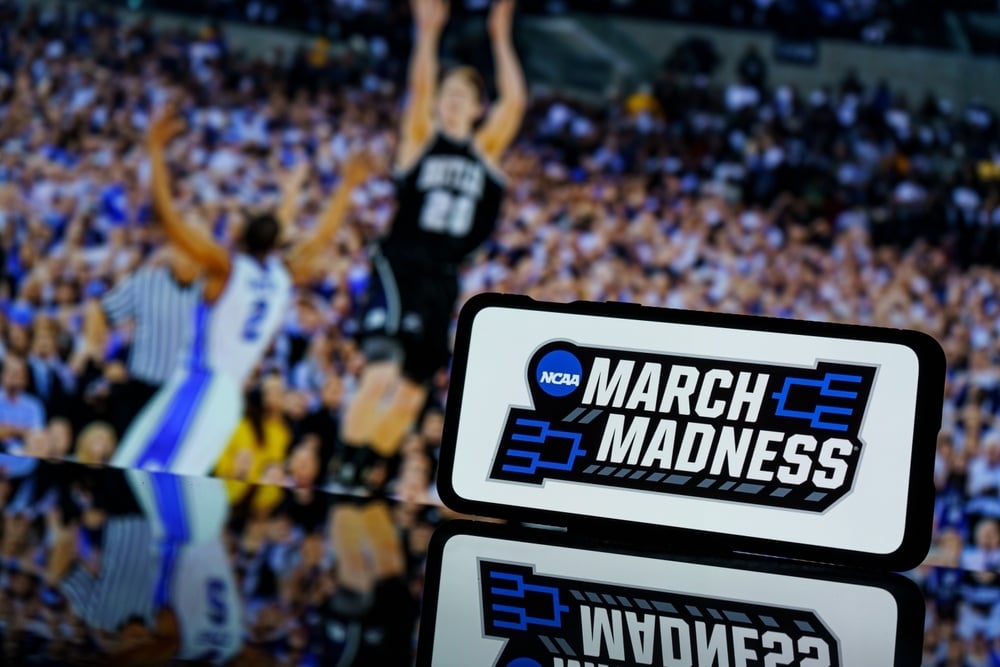
March Madness 2026 is here, bringing everything fans love about the NCAA Tournament: last-second shots, busted brackets, and underdogs rewriting the script.
If you’re thinking about placing bets this year, it's time to get your strategy nailed. Do you go for big names, big action, or is betting every underdog actually a profitable strategy?
It sounds tempting with every tournament offering the potential for delivering shocking upsets and massive payouts. But turning that chaos into consistent profit is a different story.
Let’s break down what really happens when you bet every underdog and what smarter bettors are doing instead...
Contents:
- Why Betting Underdogs Feels So Appealing
- Do Underdogs Actually Win Enough?
- What Recent Tournaments Tell Us
- Why Blind Underdog Betting Falls Apart
- A Smarter Way to Approach March Madness 2026
- Your Winning Strategy for March Madness 2026
1. Why Betting Underdogs Feels So Appealing
Like most sports, March Madness is built on unpredictability.
Every year, lower-seeded teams knock out heavy favorites. With these moments dominating headlines and highlight reels, it's easy to create the impression that underdogs win all the time.
From a betting perspective therefore, the appeal of picking an underdog is obvious:
-
Bigger odds = bigger payouts
-
One upset can cover multiple losses
-
Early rounds are full of potential surprises
Landing a +800 or +1200 winner feels like cracking the code but the key question is: how often does that actually happen?
2. Do Underdogs Actually Win Enough?
There are two main ways to look at underdog betting:
Against the Spread (ATS)
Historically, underdogs have actually performed slightly better than favorites against the spread in the NCAA Tournament. But the margin is tiny.
The edge is often less than 1% so sportsbook margins (vig) erase any advantage and results vary significantly year to year anyway.
In other words, there’s no reliable long-term edge here.
Moneyline Bets
This is where most bettors focus as underdog moneylines offer huge returns. However, they win far less frequently.
Here's the problem:
-
You need multiple big upsets to stay profitable.
-
Most tournaments don’t deliver enough of them.
-
Losses accumulate quickly when favorites dominate.
A single deep Cinderella run can make the strategy look genius but without it, the numbers don’t hold up.
Consider these legendary moments:
- 2018: UMBC made history by becoming the first No. 16 seed to beat a No. 1 seed (Virginia) as a +2000 underdog.
- 2021: Oral Roberts stunned Ohio State (+1000) and followed up with another win over Florida (+350).
- 2022: Saint Peter’s went on an epic run to the Elite Eight with victories at +1100, +650, and +300 odds.
Incredible? Absolutely. But these Cinderella stories are the exception, not the rule. When you remove these rare, high-paying upsets, betting every underdog typically results in a slow (and painful) bankroll drain.
3. What Recent Tournaments Tell Us
Recent tournaments reinforce the same pattern:
Early Rounds: Opportunity
-
The Round of 64 consistently produces the most upsets.
-
Double-digit seeds win multiple games each year.
-
Underdog bettors often start strong.
Later Rounds: Reality Check
-
Favorites begin to take control.
-
Talent gaps become more obvious.
-
Underdog win rates drop sharply.
This creates a familiar cycle where there are early profits from surprise wins but gradual losses as the tournament progresses. The final outcome depends on whether a major upset run occurs. Most years, it doesn’t, but you never know!
4. Why Blind Underdog Betting Falls Apart
The biggest issue with betting every underdog is simple: you’re relying on rare events to stay profitable.
Cinderella stories feel common because they’re so memorable, but they don’t happen often enough to build a consistent edge. Deep tournament runs from low seeds are relatively rare, and when they do happen, they’re difficult to predict in advance. Big odds wins might deliver eye-catching payouts, but they occur sporadically rather than consistently.
On top of that, sportsbooks are well aware of how bettors think. They price markets to reflect public bias toward both favorites and longshots, which means the odds you’re getting aren’t as generous as they appear on the surface.
The result is a strategy that works against you over time. You end up overpaying for long odds, taking on steady losses as favorites win the majority of games, and ultimately relying on unlikely outcomes to recover your bankroll. And that’s not a sustainable approach. In fact, it's variance rather than a real strategy.
5. A Smarter Way to Approach March Madness 2026
But that doesn’t mean underdogs should be ignored completely. It just means they should be used selectively and strategically.
Here’s what sharper bettors tend to focus on:
-
Targeted Matchups: Some underdogs are mispriced due to stylistic advantages, pace, or defensive matchups.
-
Experience & Coaching: Teams with veteran players or strong coaching often outperform their seed.
-
Market Overreactions: Public money can inflate favorites, creating value on the other side.
Instead of betting every underdog, the real edge comes from identifying the right ones.
6. Your Winning Strategy for March Madness 2026
Let’s face it: 97% of bettors lose money during March Madness. But you don’t have to be one of them.

By following a matched betting strategy, you can capitalize on underdog odds and lock in profit without taking on unnecessary risks. And if you’re serious about maximizing your returns, our ProfitDuel Premium platform is your secret weapon.
We’ve put together a free guide revealing the 5 Best Betting Strategies for March Madness 2026. It's full of actionable tips and proven techniques to help you cash in on all the madness.
Ready to Bank Some Profits?
March Madness is unpredictable, but your profits don’t have to be. With matched betting and the right strategy, you can make every underdog count without relying on luck.
So, why risk it? Join ProfitDuel today, and let’s make this March Madness your most profitable one yet.



.png?width=50&height=50&name=download%20(1).png)